
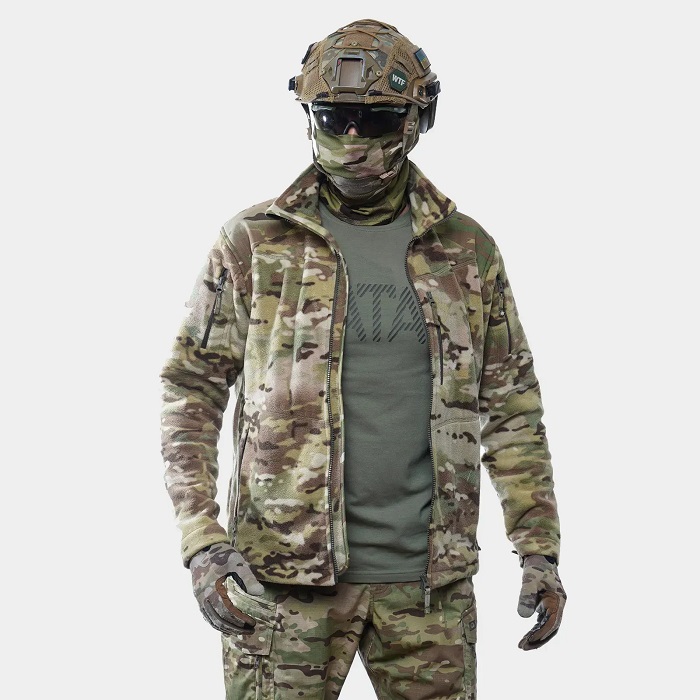
In autumn what keeps a soldier warm is not one heavy garment but the right combination of layers: a moisture-wicking base, a fleece for insulation and a mid-season shell for wind and rain. That kit covers roughly +15 to 0 °C and adjusts to activity level in seconds.
The principle: each layer does one job
The base layer moves sweat off the skin. The fleece traps warmth and breathes. The shell stops wind and precipitation. When one garment tries to do everything, it does nothing well: it overheats you on the move and fails to warm you on post. That is exactly why the US Army ECWCS system — validated hard in Ukraine’s war — is built on specialized, combinable layers.
Autumn combinations by temperature
| Temperature | Combination | Note |
|---|---|---|
| +15…+10 °C | Base + ripstop shell | Fleece packed as reserve |
| +10…+5 °C | Base + fleece + shell | The working autumn formula |
| +5…0 °C, rain | Base + fleece + membrane shell | Membrane from 10,000 mm |
| Steady frost | Base + fleece + insulated winter jacket | Switch to the winter kit |
Common mistakes
First: cotton against the skin — it soaks and chills in the wind. Second: a winter jacket in October — overheating, then freezing. Third: fleece worn over the shell “for speed” — insulation only works under wind protection. Fourth: ignoring ventilation — jackets with side zips dump heat without undressing.
It is practical to build the layers from one manufacturer — cuts are matched, layers do not bind. Ukraine’s UATAC covers the full stack: fleece jackets as Level 3, demi-season jackets in ripstop and membrane as Levels 4–5, and Climashield APEX winter jackets for frost.
FAQ
What is the ECWCS layering system?
ECWCS is a US Army concept: instead of one heavy garment, several specialized layers — from wicking base to insulated winter jacket — combined to match weather and activity. The full system covers roughly +4 to −51 °C (+40 to −60 °F).
How many clothing layers do you need in autumn?
Usually three: a moisture-wicking base layer, a fleece as insulation and a mid-season shell as wind and rain protection. Shed the fleece on the move, add it on post. One kit covers roughly +15 to 0 °C.
Why is a cotton T-shirt under the jacket a mistake?
Cotton absorbs sweat and dries slowly: a soaked back in autumn wind is a guaranteed chill. The base layer should be synthetic or merino wool — fabrics that move moisture away from the skin and dry while you move.
Can you wear a winter jacket instead of a mid-season one in autumn?
Better not: an insulated jacket at +10 °C overheats you on the move, you sweat and then freeze. The autumn formula is a light shell plus a fleece that regulates warmth. The winter jacket enters with steady sub-zero temperatures.
What role does fleece play in the layering system?
Fleece is the primary insulating layer (ECWCS Level 3): it holds warmth, breathes and dries fast. In autumn it works under the shell jacket; on mild days it serves as a standalone outer layer.
What changes when autumn turns to winter?
With steady frost the mid-season shell gives way to an insulated winter jacket (the Level 7 role), worn over all layers during static tasks. Base and fleece stay the same — that gradual build-up is the system’s core advantage.