
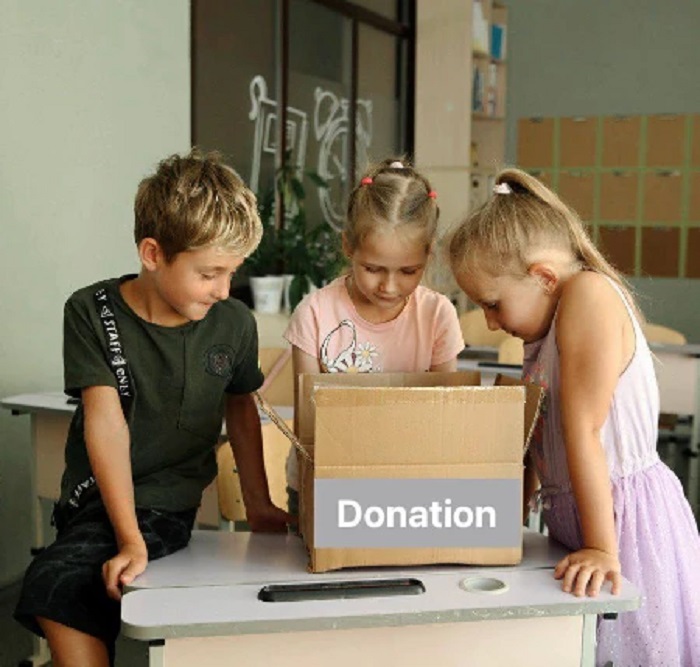
In today’s rapidly changing world, education is no longer limited to textbooks and classroom lectures. It has become a dynamic ecosystem where curiosity, research, experimentation, and innovation shape the next generation of thinkers. Khmelnytskyi Lyceum “Moyi Obriyi” stands as an example of this modern educational approach, offering students the opportunity to engage in meaningful academic exploration across multiple disciplines.
The lyceum is more than just a school—it is a developing research environment where students are encouraged to ask questions, test hypotheses, and pursue original ideas. Within its academic framework, young learners work on projects in natural sciences, linguistics, history, psychology, and information technology. These fields are not treated as isolated subjects but as interconnected areas where interdisciplinary thinking is actively promoted.
A Culture of Research and Innovation
One of the defining characteristics of Khmelnytskyi Lyceum “Moyi Obriyi” is its emphasis on student-led research. Learners are not passive recipients of information; instead, they are active participants in the creation of knowledge. This approach fosters critical thinking, analytical skills, and intellectual independence.
Students often develop projects that require laboratory experiments, data analysis, software development, or field research. For example, in IT-related studies, learners may design prototypes, mobile applications, or data-driven solutions to real-world problems. In humanities subjects, they might conduct archival research, sociolinguistic surveys, or psychological studies involving structured observations.
Such work requires not only intellectual effort but also access to modern resources and tools that are often beyond the standard school infrastructure.
Challenges in Developing Academic Projects
While the academic ambition of students is high, their projects frequently demand additional resources. Advanced research often requires:
- Laboratory equipment for experiments in physics, chemistry, or biology
- Specialized software for data analysis, programming, or modeling
- Access to academic databases and research materials
- Transportation for participation in regional, national, or international conferences
- Expert consultations with professionals from universities, research institutes, or industry
These components are essential for transforming a good student idea into a fully developed scientific or applied project. However, they also represent a significant financial challenge for educational institutions, especially those striving to maintain high-quality, inclusive learning environments.
Without external support, many promising ideas may remain unrealized—not due to lack of talent or motivation, but due to limited access to necessary tools.
Why Support Matters
Supporting educational initiatives like Khmelnytskyi Lyceum “Moyi Obriyi” is not simply about funding a school. It is about investing in the intellectual capital of the next generation. Every contribution helps create conditions where students can fully develop their abilities and bring innovative ideas to life.
Even relatively small donations can have a meaningful impact. They may enable a student to attend a scientific conference, purchase essential components for a research prototype, or gain access to specialized educational software. In many cases, such opportunities become turning points in a young researcher’s academic development.
More broadly, these investments contribute to the strengthening of Ukraine’s scientific and educational potential. By supporting youth research today, donors help build the foundation for future discoveries, technological advancements, and cultural development.
Areas of Student Impact
The work conducted at the lyceum spans several key academic domains:
1. Natural Sciences
Students engage in experiments that explore physical laws, chemical reactions, biological systems, and environmental processes. This hands-on experience builds a strong foundation in scientific methodology.
2. Linguistics and Humanities
Research in language and history allows students to analyze cultural evolution, communication patterns, and historical narratives. Such studies foster a deeper understanding of identity and society.
3. Psychology and Social Sciences
Projects in this field often focus on human behavior, cognitive processes, and social interaction. Students learn to design surveys, interpret data, and understand psychological principles.
4. Information Technology
Modern IT projects include software development, algorithm design, artificial intelligence exploration, and data visualization. These skills are increasingly important in the global economy.
Each of these areas requires not only academic supervision but also material and technical support to reach its full potential.
Building Opportunities Through Community Support
Educational development is most effective when it is supported by a wider community. Parents, alumni, local organizations, and international partners all play a role in shaping the educational environment.
Community support enables the lyceum to:
- Upgrade research infrastructure
- Provide access to modern technologies
- Support student participation in academic events
- Encourage collaboration with external experts
- Expand opportunities for gifted students regardless of financial background
This collective effort ensures that education remains inclusive and forward-looking.
A Path Toward Meaningful Change
Every successful scientific or technological innovation begins with an idea. At Khmelnytskyi Lyceum “Moyi Obriyi,” many such ideas are already taking shape. Some may evolve into academic publications, others into technological prototypes or social initiatives. What they all share is potential—the potential to contribute meaningfully to society.
However, potential alone is not enough. It requires support, resources, and belief in the value of youth education.
For those who wish to contribute to the development of young talent and Ukrainian education, support can be provided through the official platform: Support Moi Obrii.
Conclusion
Khmelnytskyi Lyceum “Moyi Obriyi” represents a modern vision of education—one that combines academic rigor with creativity, research with practice, and learning with real-world application. Its students are not only preparing for exams but also engaging in work that may one day influence scientific, technological, and social progress.
Supporting such initiatives is a direct investment in the future. It ensures that talented students have the tools they need to transform ideas into impactful results, contributing to both national development and global knowledge.