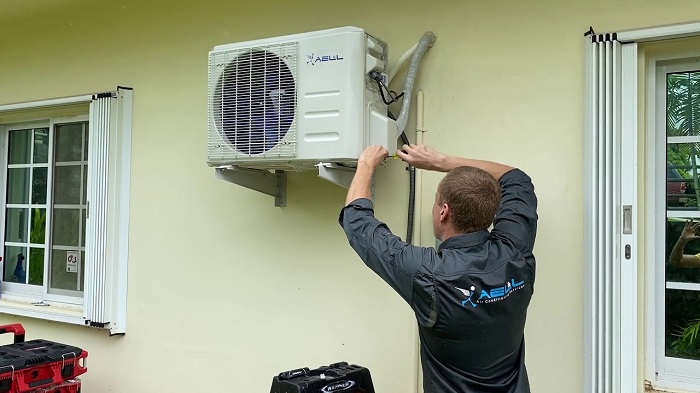
Installing a household air conditioner involves more than just attaching the units and connecting them to a power outlet. It’s a complex process that affects cooling efficiency, energy consumption, and the service life of the unit. Installation errors often don’t become apparent immediately: noise, low temperatures, frozen pipes, leaks, and increased compressor loads can occur weeks or months later.
For reliable air conditioning, it’s important to select the right location, HVAC system replacement, properly route the air ducts, perform vacuuming, and ensure proper condensate drainage. Below are key installation considerations and practical tips to help you manage the process and avoid common problems.
Capacity Selection and Electrical Network Testing Before Installation
Correctly selecting the air conditioner’s capacity affects not only comfort but also the compressor’s lifespan, energy consumption, and noise level. If the power is insufficient, the unit will operate at its limit and dehumidify less effectively. If it’s excessive, it will switch on and off more frequently, which accelerates wear.
It’s equally important to check the electrical network in advance: even high-quality installation won’t compensate for weak wiring, an overloaded line, or a lack of proper protection. Preparing the power supply before installation reduces the risk of emergency shutdowns, overheated cables, and equipment failure.
Summary: How to Make a Decision Before Installation
Start selecting the power supply based on the area of the room, then consider heat gains: sun exposure, number of people, operating appliances, kitchen areas, and ceiling height. If the conditions are challenging (panoramic windows, top floor, frequent ventilation), choose a model with a reasonable reserve, but not a significant excess.
- Evaluate the basic needs: area, ceiling height, solar orientation.
- Check the heat gains: computers, stove, server equipment, large number of people.
- Check the operating mode: doors between rooms, frequent window openings, dehumidification requirements.
- Compare with the model range: select the closest suitable power rating, based on the rating data.
An electrical network test should confirm that the line can withstand the load currents and starting modes (if applicable), and that the protection and grounding meet safety requirements. It is recommended to connect the air conditioner to a separate line from the control panel with a circuit breaker of the appropriate rating and a residual-current device (RCD/RCD) (as per the design/terminals).
- Determine the actual line load: which consumers are already connected to this circuit breaker, and is there any reserve?
- Check the wiring: wire material, cross-section, terminal condition, and absence of heating or burning.
- Ensure grounding: the correct PE conductor and proper connection.
- Check the control panel: ensure the circuit breaker and RCD/RCD match the equipment parameters, and ensure the quality of the contacts.
- Assess the voltage: if there are noticeable drops, provide voltage stabilization/voltage monitoring relay as needed.
Result: Correct power + a prepared electrical network = stable air conditioner operation without overloads, unnecessary power cycles, emergency shutdowns, and premature wear. Before installation, record the power calculation and power supply diagram – this simplifies installation and increases operational safety.