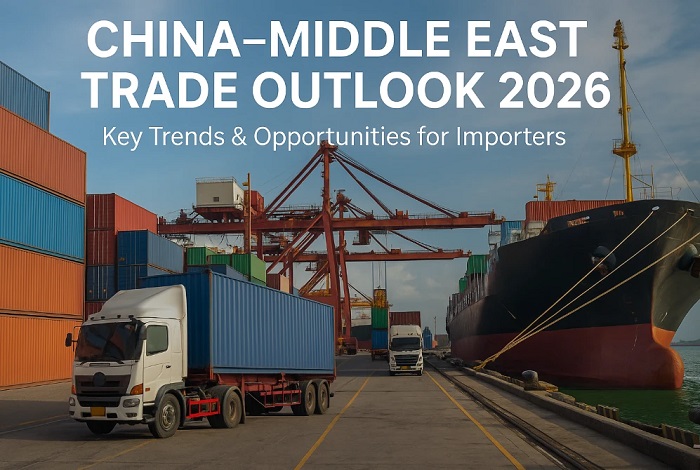
China’s trade presence across the Middle East has been growing steadily for more than a decade—but 2026 is shaping up to be a turning point. With new infrastructure investments, improved shipping corridors, and stronger diplomatic ties, the region is becoming one of China’s most strategic trading partners.
For importers, wholesalers, and logistics planners, understanding how this relationship is evolving is essential for making smarter sourcing and shipping decisions.
Why the Middle East Matters So Much to China
The Middle East is more than just a buyer of Chinese products. It is a region with:
- rapidly expanding retail and e-commerce sectors
- major infrastructure development projects
- high demand for electronics, construction materials, and consumer goods
- growing automotive and industrial markets
Countries like Saudi Arabia, the UAE, Qatar, and Oman have dramatically increased their yearly imports from China, largely because supply reliability and pricing remain competitive.
Key Trends Defining China–Middle East Trade in 2026
1. Stronger Logistics Connectivity
China has been expanding its shipping routes and port partnerships across the Gulf region. Faster customs processes and more frequent sailing schedules are making trade easier than ever.
For example, many importers using DDP Sea to Saudi Arabia now experience smoother door-to-door delivery cycles compared to previous years, thanks to upgraded port facilities and simplified procedures.
2. Rising Demand for Chinese Consumer Goods
Middle Eastern buyers continue to import:
- electronics
- home and kitchen products
- building materials
- auto parts
- clothing and accessories
With urban populations rising and e-commerce booming, demand for Chinese goods is expected to increase through 2026 and beyond.
3. China’s Role in Major Development Projects
Saudi Arabia’s Vision 2030, Qatar’s infrastructure expansion, and the UAE’s long-term development plans all rely heavily on Chinese manufacturing and engineering expertise.
This leads to consistent demand for machinery, construction equipment, and industrial materials from China.
How Logistics Providers Support This Growing Relationship
Behind every strong trade connection is a logistics network that keeps everything moving.
As demand increases, Middle Eastern companies rely on freight partners who understand both Chinese export systems and Gulf-region customs rules.
More businesses now work with specialized providers—like DDPCHAIN shipping services for businesses—because they offer tailored support for Middle Eastern import requirements, especially for duty-paid shipments, consolidation, and compliant documentation.
Why DDP Services Are Becoming More Popular
DDP (Delivered Duty Paid) shipping has become a preferred method in many Middle Eastern countries because it simplifies the process for importers.
Benefits include:
- customs handled on the sender’s side
- predictable total landed cost
- fewer risks of delays
- easier budgeting for new importers
When paired with sea freight solutions—such as DDP Sea to Saudi Arabia—it becomes one of the most efficient ways to transport medium and large-volume shipments.
What Businesses Should Prepare for in 2026
1. Earlier Order Planning
As trade volume rises, securing shipping space early becomes essential—especially before major Middle Eastern or Chinese holiday seasons.
2. More Transparent Supply Chains
Governments in the region are adopting digital customs platforms, meaning accurate paperwork and proper HS codes are now mandatory.
3. Higher Standards for Logistics Partners
Companies will expect better tracking, faster support, and more flexible delivery options. Working with providers who understand the cultural and regulatory differences between regions will be key.
Final Insight
China’s trade relationship with the Middle East in 2026 is stronger, more structured, and more opportunity-filled than ever. Businesses that import regularly—from Saudi Arabia to the UAE—can expect smoother logistics, more competitive pricing, and easier access to reliable suppliers.
And with dependable freight partners offering comprehensive solutions, importers across the region can scale faster and manage their supply chains with greater confidence.