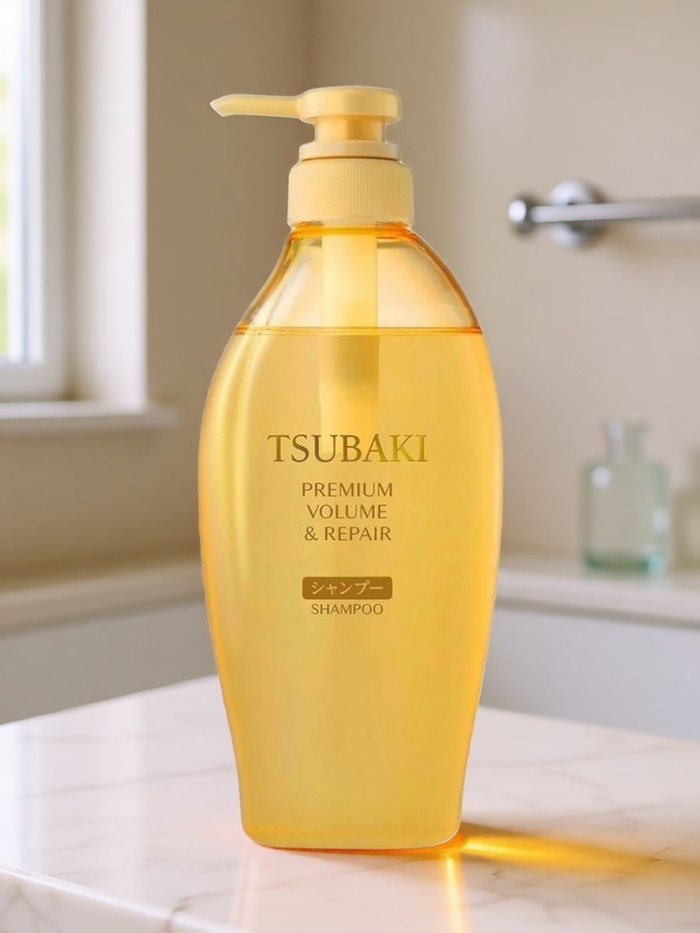
Japanese shampoos have long been a symbol of a meticulous approach to hair care: the emphasis is on gentle cleansing, maintaining scalp balance, and providing noticeable cosmetic results without weighing hair down.
They are chosen for their predictable results, well-thought-out formulas, and attention to detail – from the quality of surfactants to the combination of care ingredients.
In Japan, the culture of daily hygiene is closely linked to scalp comfort, so many products focus not only on the “beauty of the length” but also on the health of the roots. As a result, shampoo is perceived as part of a comprehensive care system that takes into account skin type, the degree of hair damage, and seasonal changes.
Advantages of Japanese Shampoos
Gentle cleansing and scalp comfort. Many lines use more gentle cleansing bases and additional emollients, reducing the risk of dryness, itching, and a “squeaky” sensation after washing.
Balanced care and a light texture. Often, formulas provide smoothness and shine without noticeable oiliness at the roots, which is especially beneficial for combination scalps.
Focus on damage prevention. Formulations often include complexes for strengthening, protecting the cuticle, and visually thickening the hair shaft, which helps with breakage, porosity, and dullness.
Convenient care systems. Many brands produce shampoo + conditioner/mask pairs, as well as options for different purposes within the same series, to make it easier to create a regular care routine.
How to choose a Japanese shampoo: step by step
- Determine your scalp type. Oiliness at the roots, dryness, sensitivity, and discomfort are more important than the condition of the ends.
- Assess the degree of damage to the lengths. Coloring, lightening, heat styling, and breakage will tell you whether you need a restorative or moisturizing option.
- Choose a goal for the next 3-4 weeks. For example: less oiliness, less frizz, more smoothness, color retention, or volume—having one primary goal makes the choice easier.
- Consider the season and water. Winter often requires more softening and moisturizing, while hard water may require periodic, more thorough cleansing.
- Collect a minimal kit. A shampoo based on your scalp type and a conditioner/mask based on your length often produces better results than the “most nourishing shampoo” alone.
Practice for Best Results
Double wash if necessary. The first application removes impurities and styling product, the second works “on the scalp” and creates a full lather.
Lather is more important than friction. It’s better to lather the japanese hair shampoo in your palms and distribute it over your scalp with gentle movements rather than vigorously rubbing the lengths.
Conditioner – for the lengths. To avoid overloading the roots, apply care products primarily to the midsection and ends.
Evaluating the results over time. It’s usually accurate to judge the compatibility of a shampoo after 2–4 weeks of regular use, based on the condition of your scalp, the softness, and manageability of your hair.
Summary: How to Choose a Japanese Shampoo and Get Results
Japanese shampoos are valued for their well-thought-out formulas, gentle cleansing, and emphasis on scalp health: when chosen correctly, they help improve hair quality, reduce breakage, and restore comfort to sensitive or oily hair.
The key to success is to choose a product not based on the promises on the packaging, but based on your actual needs: scalp type, hair length, washing frequency, and response to the active ingredients. Then the benefits of Japanese care will manifest more quickly and consistently.
A Short Selection Checklist
- Prioritize: scalp (oily/dry/sensitive) or length (dry/damaged/porous).
- Choose the type of shampoo: for daily gentle cleansing, restorative, moisturizing, sebum-balancing, for volume, or anti-dandruff.
- Evaluate the ingredients accordingly: mild surfactants – for frequent use; proteins/amino acids – for damaged lengths; soothing ingredients – for sensitive scalp.
- Check tolerance: if you are prone to irritation, avoid strong fragrances and aggressive degreasers; do a trial application.
- Set the regime: apply shampoo to the scalp, rinse the lengths with foam; If needed, use a conditioner/mask based on the lengths.
Final recommendation: start with a basic, gentle shampoo for your scalp type and add a second shampoo based on the specific needs (restorative/volumizing/anti-dandruff) for rotation – this will help maintain balance and achieve noticeable yet lasting results.